
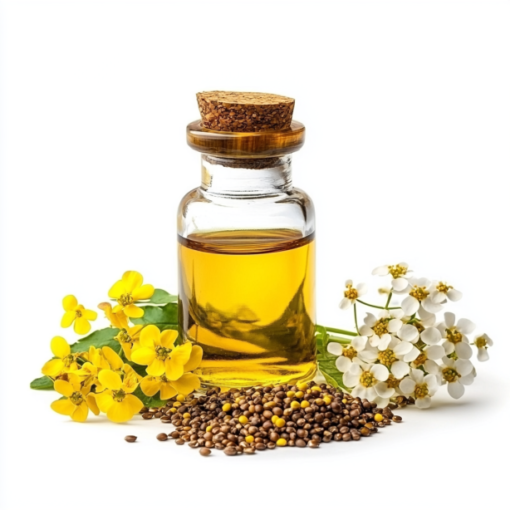
Mustard seed oil is a valuable product with a wide range of uses in both the food and cosmetics industries.
Food properties
Mustard seed oil stands out from other vegetable oils with its yellow or amber color and distinct, slightly spicy aroma. It contains high concentrations of omega-3 and omega-6 fatty acids, which are crucial for heart health and the proper functioning of the circulatory system. Regular consumption of mustard seed oil can help lower LDL cholesterol (“bad cholesterol”) and support blood circulation, which is important in preventing cardiovascular disease.
Application in natural medicine
Traditionally, mustard oil has also been used as an adjunct in the treatment of infections, coughs, and colds due to its antibacterial and anti-inflammatory properties. Its external application can provide relief from respiratory tract inflammation, providing a soothing and warming effect.
Cosmetic use
In the cosmetics industry, mustard seed oil is valued for its moisturizing and regenerative properties. It is rich in vitamins A and E, known antioxidants, and helps maintain skin elasticity, reduce fine lines, and improve overall skin texture. This oil is also used in hair care, where it has nourishing and strengthening properties.
Mustard oil is also recommended for use on dry, cracked heels and brittle nails, making it an effective ingredient in lotions, creams, and other body care products. It can also protect against the harmful effects of UV rays.
Fatty acid content:
| Name of the acid | C-Chain | Range (%) | Result |
|---|---|---|---|
| PALMITIC | C16:0 | 1.0-5.0 | 2.7 |
| STEARIC | C18:0 | 0.5-3.0 | 0.9 |
| OLEIC | C18:1 | 17.0-26.0 | 21.9 |
| LINOLEIC | C18:2 | 7.0-12.0 | 19.8 |
| LINOLENIC | C18:3 | 5.0-16.0 | 8.1 |
| ICOSENOIC | C20:1 | 5.0-16.0 | 13.2 |
| ERUCIC (22:1n9) | C22:1n9 | 34.0-49.0 | 39.8 |
Reviews
There are no reviews yet.