
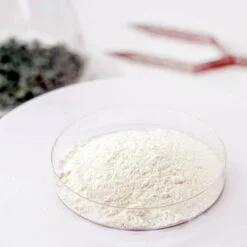
Phytoglycogen is a plant polysaccharide composed of tens of thousands of glucose molecules. It is a compound found exclusively in plants, hence the prefix “phyto.” It is a reserve material stored in the mitochondria of plant cells.
Phytoglycogen – properties
Phytoglycogen, like other polysaccharides, has many advantages that make it suitable for use in cosmetics.
In humans, glycogen serves as an energy store in the form of glucose. This simple sugar is a substrate in one of the fundamental processes that simultaneously determines the vital functions of cells – cellular respiration. Glycans (polysaccharides) also occur on the surface of cells, where they participate in reactions known as intercellular communication.
Unfortunately, with age, cell renewal slows, and the rate at which the skin produces the components responsible for elasticity and youthful appearance (including hyaluronic acid and collagen ) also declines. Phytoglycogen can be used in cosmetics for mature skin as an additional sugar boost, allowing older cells to function and “communicate” like new, younger ones. This is how it’s used in nourishing and anti-wrinkle creams and toners, among other products .
Phytoglycogen’s properties also include moisturizing properties . This ingredient belongs to the group of humectants, substances responsible for attracting water molecules, binding them, and retaining them within the stratum corneum of the epidermis. It creates a protective film that prevents excess water molecules from escaping. This restores skin’s moisture, softening, and soothing properties.
Reviews
There are no reviews yet.